June 2026 Briefing AI is Cheap Right Now. That is Changing.
skip render: ucaddon_dual_color_heading Why AI is So Affordable Right Now Construction AI Lab is a no cost sudyco® initiative focused



Construction AI Lab is a no cost sudyco® initiative focused on understanding how AI is actually showing up across the construction industry—what’s being used, what’s working, what’s not, and what’s coming next.
The Next Frontier Isn’t Using AI — It’s Managing It
Dear Sue,
I keep hearing about 'AI agents' and how they're going to change everything about how we manage projects. Honestly, I don't even know what an AI agent is, and I'm not sure it matters yet for my work as a project manager. But I don't want to miss what's coming. Should I be paying attention to this? And if so, where do I even start?
— Looking to See What's Coming
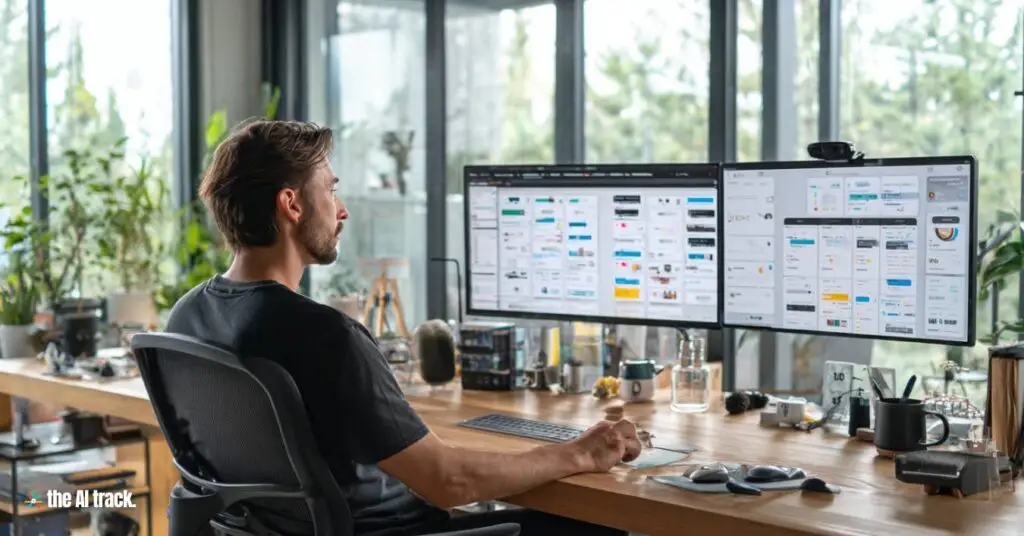
Forget the word 'agent.' Think about digital team members instead.
Imagine you had a meeting assistant that captured every discussion and drafted your summaries. Or a specification assistant that could search through thousands of pages of project documents in seconds. An RFI assistant that helped you organize and draft responses. A submittal tracking assistant that flagged what was overdue. A change order assistant that pulled together every piece of relevant project history before you sat down to write.Each one performs a specialized role.
Each one supports the project team. Each one contributes information. In many ways, these AI systems are starting to resemble team members more than traditional software — and the construction industry is going to need to learn how to work with them.
The Shift That's Actually Coming
For as long as most of us have been in this business, the core assumption of professional work has been simple: the professional performs the work. The project engineer writes the correspondence. The project manager tracks the commitments. The superintendent reviews the reports. The coordinator updates the logs.
What's beginning to change isn't that AI will do all of that. It's that construction professionals may increasingly find themselves overseeing AI systems that perform portions of the work on their behalf.
The role isn't disappearing. It's shifting from 'I do the work' to 'I supervise the work.'
That should actually sound very familiar to you. A superintendent doesn't personally perform every trade activity on a project. A project manager doesn't personally complete every engineering task. Their value lies in their ability to coordinate, verify, guide, and remain accountable for outcomes. The same principle is likely to apply to AI-enabled work — and perhaps sooner than most people expect.
What This Means for Human Value
One of the most persistent fears about AI is that automation reduces the importance of people. I want to push back on that directly, because I think it gets the situation exactly backwards.
As digital team members take on routine information processing tasks — drafting, searching, tracking, organizing — human value becomes more concentrated in the things AI genuinely cannot do. Judgment. Context. Decision-making. Verification. Coordination under pressure. Leadership when something goes wrong. Accountability for outcomes.
Construction has always been a business of relationships and trust. No AI system can assume responsibility for a project. No digital assistant can look an owner in the eye and say 'I've got this.' People remain accountable — and that accountability is going to matter more, not less, as these systems become more capable.
The question isn't whether AI will change how project teams work. It already is. The question is whether you'll be prepared to lead when it does.

A New Competency: Agent Management
To your question about where to start — I'd encourage you to stop thinking about this as a technology skill and start thinking about it as a management skill. The professionals who will be most effective in an AI-enabled project environment won't necessarily be the ones who know the most about how the technology works. They'll be the ones who know how to work with it.
That means developing clear judgment about what work should be delegated and what should remain under direct human control. It means learning how to verify AI-generated outputs — because these systems make mistakes, and those mistakes can be confident and plausible-sounding. It means knowing when to intervene, and understanding how to maintain accountability across work that multiple systems are contributing to.
These are management questions, not technology questions. And they are exactly the kinds of questions that experienced project managers are well-positioned to answer — once they understand what they're actually being asked.
What We'll Be Exploring
At the Construction AI Lab, these are some of the questions we're most interested in investigating. What makes an effective digital team member? What work should agents perform, and what should remain human? How much oversight is actually required? How do teams coordinate work that involves multiple AI systems contributing simultaneously? What management practices are starting to emerge in organizations that are getting ahead of this?
The industry doesn't have clear answers yet. That's exactly why the exploration matters.
So yes — pay attention to this. Not because you need to run out and implement anything today. But because the professionals who begin developing this management intuition now are the ones who are going to be most effective when the transition accelerates. And based on what we're seeing, that transition is already underway.
The future may belong not to those who know the most prompts, but to those who learn how to effectively lead, supervise, and collaborate with increasingly capable digital teammates.
The good news is that you already have most of what you need. You understand accountability. You understand delegation. You understand what it means to coordinate complex work across multiple contributors and remain responsible for the outcome. Those principles don't change. The team just looks a little different going forward.
— Sue
Did this help you? Have a question? Or willing to share how you're using AI in the field? Let us know — and your question or story may be featured in a future issue of Construction AI Lab. Email: [email protected] | Subject line: Dear Sue
ABOUT THE AUTHOR
Sue Dyer is the founder of Construction AI Lab, where she shares simple, practical ways construction professionals can use AI to save time, reduce frustration, and run better projects. Contact: [email protected]
This publication is provided for educational and informational purposes only and does not constitute legal, cybersecurity, technical, or professional advice. Organizations should evaluate their own operational, legal, security, and governance requirements when implementing AI technologies. AI systems, policies, and industry practices continue to evolve rapidly. Construction AI Lab and sudyco® make no guarantees regarding specific outcomes, compliance, or risk mitigation associated with the use of AI technologies.
Built for the Industry. Meant to be Shared. You Have Our Permission.
© 2026 Construction AI Lab, an initiative of sudyco®