Ask and You Shall Receive
skip render: ucaddon_dual_color_heading Why AI is So Affordable Right Now Construction AI Lab helps busy construction professionals stay ahead of



Construction AI Lab is a no cost sudyco® initiative focused on understanding how AI is actually showing up across the construction industry—what’s being used, what’s working, what’s not, and what’s coming next.
You Don't Learn AI. You Practice It.
Dear Sue,
I’m a project manager with about 15 years in school construction. My company has been talking about AI for months, and Ikeep getting told I need to “get up to speed” on it before we roll anything out. I’ve watched the webinars. I’ve read some articles. But honestly, I still don’t feel ready, and neither does my team. At what point do we actually start? Is there a training program we should go through first?
— Frustrated in the Field
Dear Frustrated,
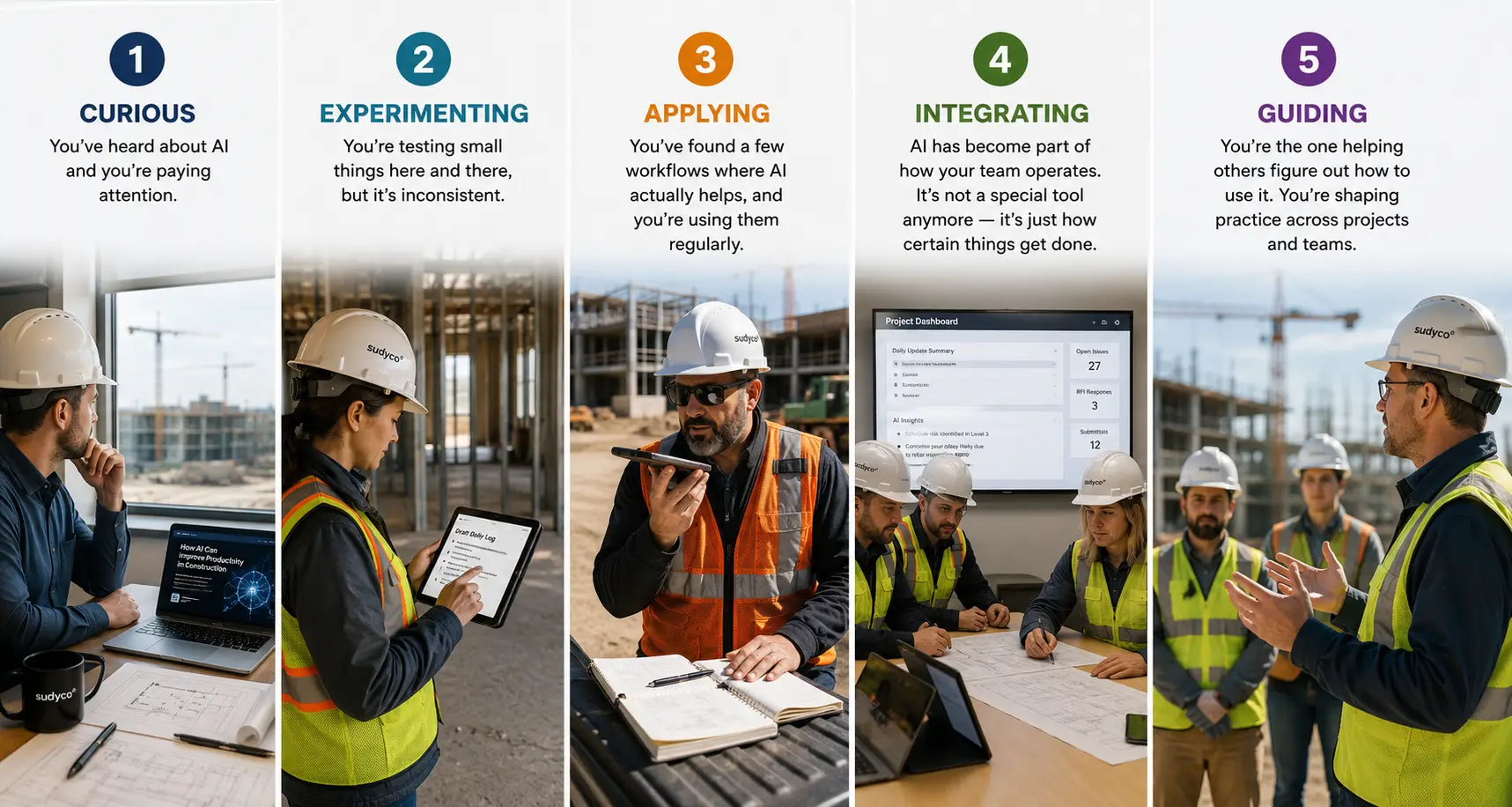
You don’t learn AI first and then use it. You use it and that’s how you learn.
That might sound like I’m splitting hairs, but it matters more than you think. Most of the contractors I talk to are making the same mistake now: telling their people to use AI but not telling them it is okay to experiment and learn as you go, then share what you’ve learned.

In construction, we’ve never learned that way. Think about how you actually got good at your job. It wasn’t from reading the spec cover to cover before you set foot on a jobsite. You learned by watching, by trying things, by making mistakes in controlled situations and adjusting. Someone showed you something. You tried it. You got better. Over time, the patterns you repeated became your instincts.
AI works exactly the same way.
The teams getting real traction with AI right now aren’t the ones with the most training hours logged. They’re the ones who started small and stayed consistent. They turned a voice memo into a daily log. They asked AI to clean up a messy meeting summary. They drafted an email in two minutes instead of fifteen. None of those are transformational use cases on their own — but together, they start to change how work gets done. And more importantly, they change how people think about what’s possible.
In construction, hesitation around AI isn’t really about technology. It’s about trust. Your people are responsible for real projects, real money, real schedules, and real safety outcomes. They’re not going to hand any of that to something they don’t understand and haven’t seen work. That’s not resistance — that’s professionalism. And the only way through it is the same way you’d earn trust on any jobsite: show up, do the work, and let the results speak.
Did this help you? Have a question? Or willing to share how you're using AI in the field? Let us know — and your question or story may be featured in a future issue of Construction AI Lab. Email: [email protected] | Subject line: Dear Sue
ABOUT THE AUTHOR
Sue Dyer is the founder of Construction AI Lab, where she shares simple, practical ways construction professionals can use AI to save time, reduce frustration, and run better projects. Contact: [email protected]
This publication is provided for educational and informational purposes only and does not constitute legal, cybersecurity, technical, or professional advice. Organizations should evaluate their own operational, legal, security, and governance requirements when implementing AI technologies. AI systems, policies, and industry practices continue to evolve rapidly. Construction AI Lab and sudyco® make no guarantees regarding specific outcomes, compliance, or risk mitigation associated with the use of AI technologies.
© 2026 Construction AI Lab, an initiative of sudyco®
Built for the Industry. Meant to be Shared. You Have Our Permission.